
Here's what vaginismus actually is
Vaginismus is an involuntary tightening of the pelvic floor muscles during penetration. It's not psychological weakness. It's your body doing exactly what it's wired to do when it perceives a threat. For some people, that threat is real pain from past injury. For others, it's learned anticipation. Either way, the muscles clench, penetration becomes difficult or painful, and the whole cycle reinforces itself.
The thing nobody tells you: vaginismus doesn't touch your capacity for clitoral pleasure. The clitoris has its own nerve pathways, its own sensation. A lemon vibrator can unlock that completely independently of what's happening deeper in your body.
Why clitoral vibrators work differently than penetration
With vaginismus, penetration triggers the pelvic floor reflex. Even thinking about penetration can do it. But external clitoral stimulation sits outside that reflex arc. It's a completely separate circuit. This is why so many people with vaginismus discover that they can have powerful orgasms with a clitoral vibrator, even when penetration feels impossible.
Lemon clitoral vibrators use air-pulse suction rather than vibration, which creates a gentler, more diffuse sensation across the clitoral tissue. There's no sharp mechanical buzzing that might create tension. Instead, you get a rhythmic squeeze that actually helps the pelvic floor relax rather than tighten. It sounds counterintuitive until you feel it.
The other reason lemon vibrators work well here: they're small, controlled, and entirely in your hands. You set the pace, the pressure, the moment. That agency matters more than you'd think when your body has spent months or years in defense mode.
Stage one: reclaiming sensation without expectations
If penetration has been painful, your nervous system may be associating any genital touch with pain. The first step is to prove to your body that touch can feel good.
Start with the vibrator on the lowest setting, away from the clitoris entirely. Touch your inner thigh. Your labia majora. Your mons pubis. Spend 10-15 minutes just building the message that this part of you can feel good. No goal. No endpoint.
When you move toward the clitoris, don't jump straight to the direct contact. Use the side or base of the vibrator first. Let your body learn that stimulation here doesn't have to hurt.
Many people with vaginismus report that this exploratory phase alone shifts something. You're rebuilding the neural pathway from genital touch to pleasure, not pain.
Stage two: building arousal and release
Once your nervous system trusts that clitoral stimulation feels good, you can start using the vibrator more intentionally. Spend real time on arousal. For people with vaginismus, arousal is healing because arousal downregulates the pelvic floor muscles. When you're genuinely turned on, the muscles relax.
Many people find that their first orgasm with a lemon vibrator happens when they stop thinking about the vaginismus entirely. They're focused on the sensation, their breathing, what they actually want in that moment. When orgasm comes, the pelvic floor releases. That release is significant. Your body learns that it can relax even when it's been clenching for years.
Don't be surprised if you cry after your first orgasm with a vibrator. Not sad tears. Release tears. Your nervous system is literally downregulating.
Stage three: integrating pleasure into partnered exploration
If you have a partner, this is where things can shift for both of you. Some people find that using a lemon clitoral vibrator during partnered time helps their pelvic floor relax because the focus is on external pleasure, not penetration pressure.
One approach: use the vibrator solo first, until you orgasm. Then, once you're fully aroused and relaxed, you and your partner can explore at a pace that feels safe. Sometimes that's penetration. Sometimes it's not. The pressure is off because you've already had pleasure. Orgasm has already happened. Everything else is a bonus.
The key conversation with your partner is this: "I'm using this to help my body relax, not because I need it instead of you." That distinction prevents the vibrator from becoming a source of shame or insecurity on either side.
What a physical therapist can add
If you're working with a pelvic floor physical therapist, a lemon vibrator can complement that work beautifully. The therapist is teaching you how to relax the muscles. The vibrator is showing you what full relaxation actually feels like. They work together.
Some therapists recommend using a vibrator right after a successful pelvic floor release, while the muscles are calm, to reinforce that state. Others suggest using it before a therapy session to warm up the nervous system. Talk to your therapist about how to sequence them.
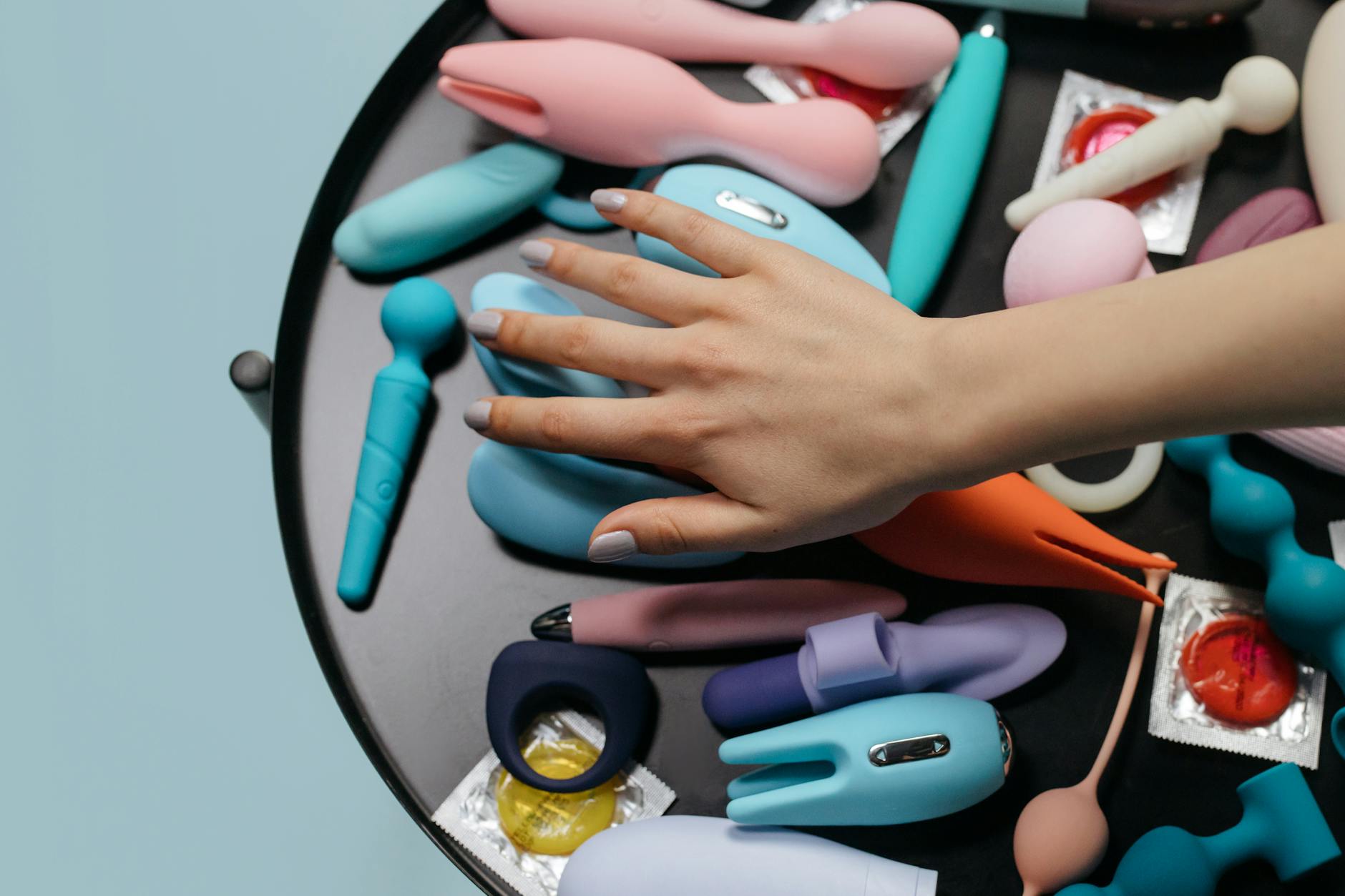
Photo by cottonbro studio on Pexels
Timing matters more than you'd think
With vaginismus, when you use the vibrator can be as important as how. Some people find that using it right before bed helps them sleep more deeply because their nervous system downregulates. Others prefer mornings when they're not already tired and tense.
If you have a menstrual cycle, you might notice that certain phases feel easier. Many people with vaginismus report that the follicular phase (first two weeks after the start of your period) feels more open, more responsive. Track what you notice. Your body has information.
Avoid using the vibrator when you're already anxious about the vaginismus. If you're in your head about it, your body will tense. Use it when you can approach it as pure exploration, not as a problem to fix.
Why "pushing through" doesn't work
Here's what I see people do wrong: they buy a vibrator, force themselves to use it, panic when sensation feels off, then abandon it. Vaginismus requires a completely different approach. You're not pushing through anything. You're inviting your nervous system to relax.
If using the vibrator triggers tension or anxiety, stop. That's data, not failure. Your body is telling you something needs to shift. Maybe you need more warmth first. Maybe you need to do some breathing work. Maybe you just need a break. Listen.
The goal is not to "cure" vaginismus with a vibrator. The goal is to prove to your body that pleasure is possible, that sensation can feel good, and that you have agency. When your nervous system believes those things, the vaginismus often resolves on its own. The vibrator is the evidence.
When to reach out for extra support
If you've been using a lemon vibrator consistently for 4-6 weeks and you're still not experiencing any arousal or pleasure, talk to a healthcare provider. Vaginismus is treatable. Sometimes that's therapy, sometimes it's pelvic floor physical therapy, sometimes it's a combination. A vibrator is a powerful tool, but it's not always the complete answer.
Also reach out if the pain during penetration is severe or if you have a history of sexual trauma. Those situations often benefit from professional support alongside self-exploration. You deserve to heal in whatever way actually works for you.
FAQ: Vaginismus and lemon clitoral vibrators
Can a lemon vibrator help relax my pelvic floor during vaginismus?
Yes. The air-suction stimulation feels gentler than traditional vibration and often helps the pelvic floor relax rather than tighten. Many people find that consistent use of a lemon clitoral vibrator actually trains their nervous system to associate genital pleasure with relaxation, not tension. That's the opposite of what vaginismus does, which makes it powerful for retraining your response.
Is it normal to feel anxious when using a vibrator if I have vaginismus?
Completely normal. Your nervous system has learned to expect pain from genital touch. A vibrator is new input, and that can feel scary. Start slow, in low-pressure settings, away from the most sensitive areas. Build your confidence in tiny steps. The anxiety usually softens as your body gets evidence that this feels good.
How often should I use a lemon vibrator if I have vaginismus?
There's no magic number. Some people use it daily as part of their healing practice. Others use it a few times a week. The key is consistency without pressure. If you're using it as a tool to retrain your nervous system, regular use helps. If it feels like homework, you're doing it too much. Aim for 2-3 times weekly and adjust based on what your body tells you.
Can I use a lemon vibrator with my partner if I have vaginismus?
Absolutely. Some people find that partner involvement makes the experience feel safer because they have control and their partner is supportive. Others prefer exploring solo first, building confidence alone, then integrating a partner later. There's no wrong answer. Communication is everything. Tell your partner exactly what you need and what the vibrator means to you.
What if penetration never becomes comfortable even with a vibrator?
Then your life doesn't have to include penetration. A lemon vibrator can deliver reliable, intense clitoral pleasure completely independently. For some people with vaginismus, that becomes their primary form of sexual expression, and that's fully valid. Your sexuality doesn't require penetration to be real or satisfying.
Should I tell my doctor I'm using a vibrator for vaginismus?
Yes, especially if you're also working with a pelvic floor physical therapist or sex therapist. They can integrate it into your overall healing plan and make sure it's supporting, not competing with, other treatments. If you're not comfortable mentioning it to your general practitioner, your pelvic floor specialist or therapist should absolutely know.
The bottom line
Vaginismus tells your body that penetration is a threat. A lemon clitoral vibrator tells your body something different: that this part of you can feel incredible, that you have control, and that pleasure is possible. Neither of those things require penetration. Neither of them require your partner to do anything special. They just require you, a vibrator, and permission to feel good.
Your pleasure matters. Not as a pathway to something else, not as a stepping stone to penetration, but as its own complete, valid experience. That's where healing often starts.
If you're ready to explore how a lemon vibrator might fit into your healing journey, we're here. And if you have questions about what tool might work best for you, reach out to our team at Lemon Sucker.